

Against the backdrop of the global wave of embodied intelligence, the performance of robot controllers has become a key determinant of their intelligence level. The KiWiBot series of embodied intelligent robot controllers from APQ offers groundbreaking solutions for high-precision motion control through innovative domestic design and a "big-brain-small-brain" collaborative control architecture.

01.
Technological Iteration: Dual Breakthroughs in Volume and Performance
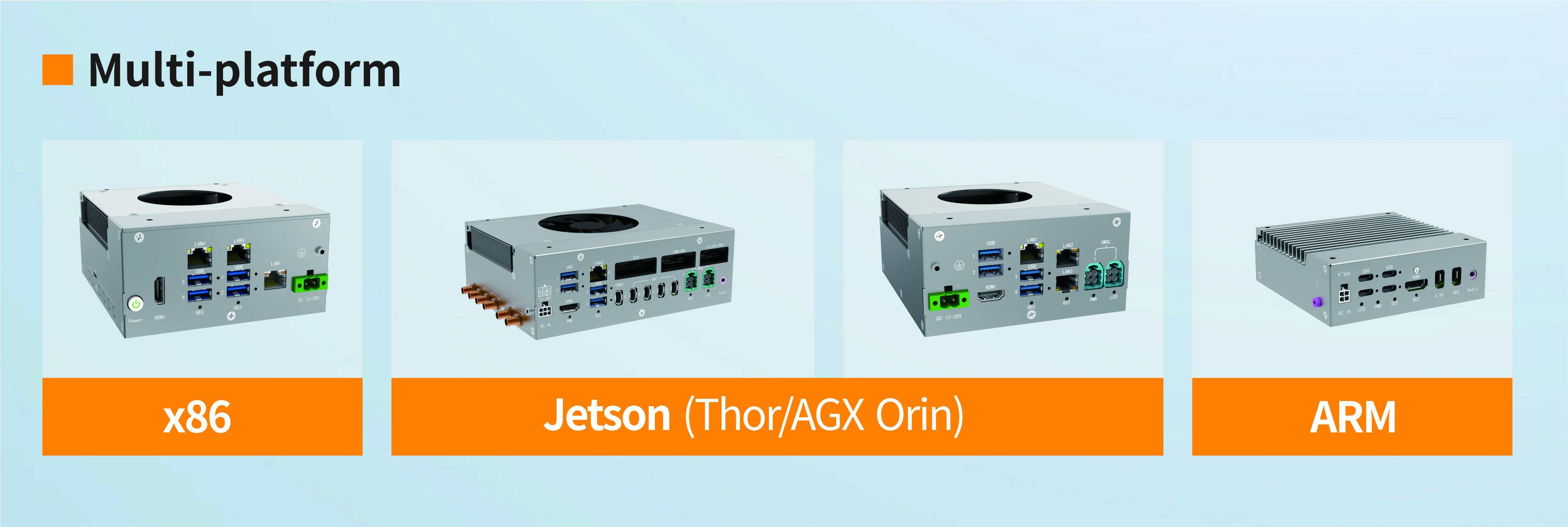
Embodied robots impose stringent requirements on controllers, including compact size, high performance, high integration, high stability, high real-time capability, and low noise. The APQ KiWiBot series of controllers, through three generations of technological evolution, has gradually addressed the pain points of traditional controllers:
The second-generation controller builds upon the X86+Orin architecture, offering advantages such as diverse models, flexible selection, strong scalability, and compact size.
The third-generation controller further optimizes overall performance, with connectors adopting an automotive wiring harness solution, significantly enhancing reliability.
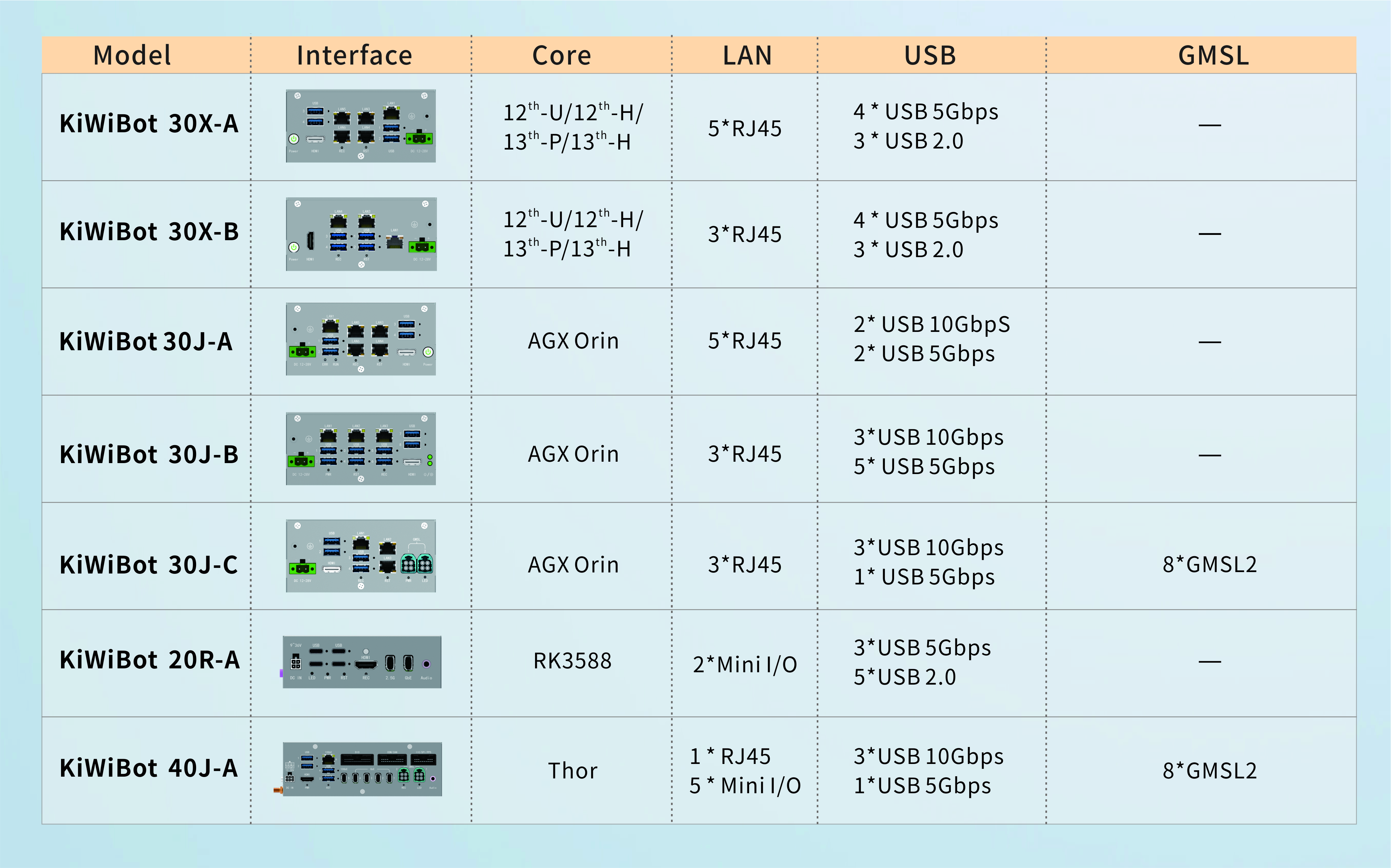
"Core Cerebellum and Cerebrum" controller Model recommendation
02.
Four installation modes: flexible to adapt to various scenarios
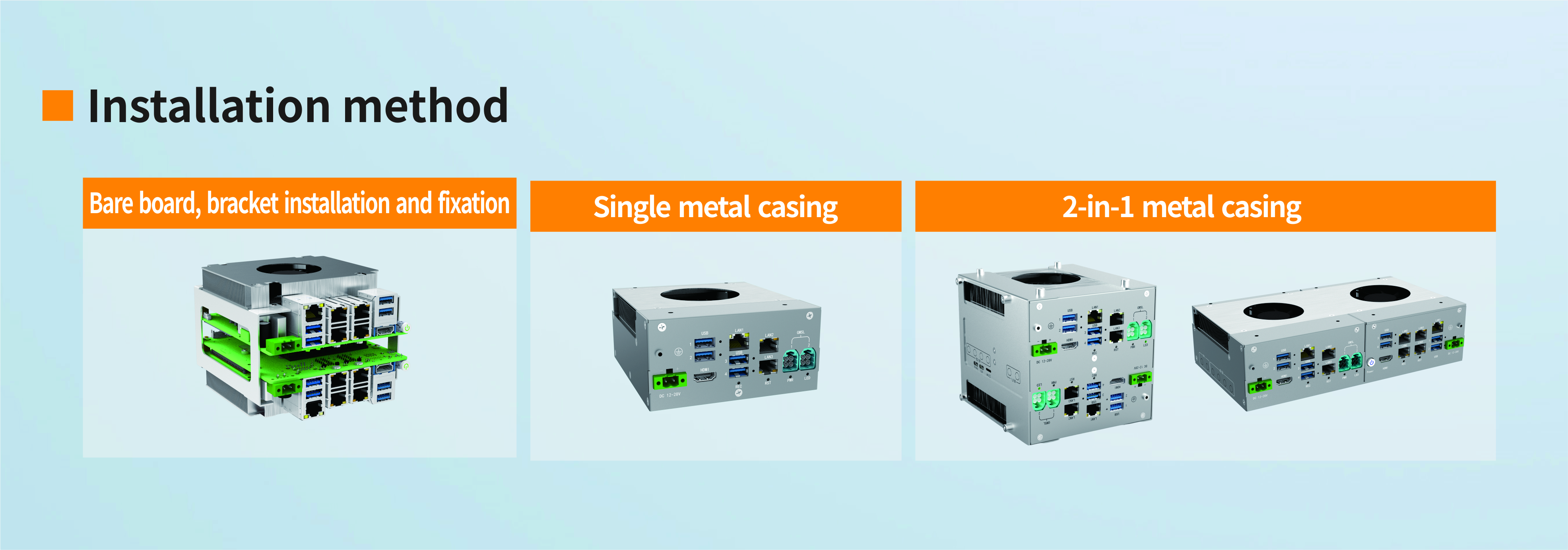
The controller offers four installation methods to ensure optimal adaptability across various application scenarios.
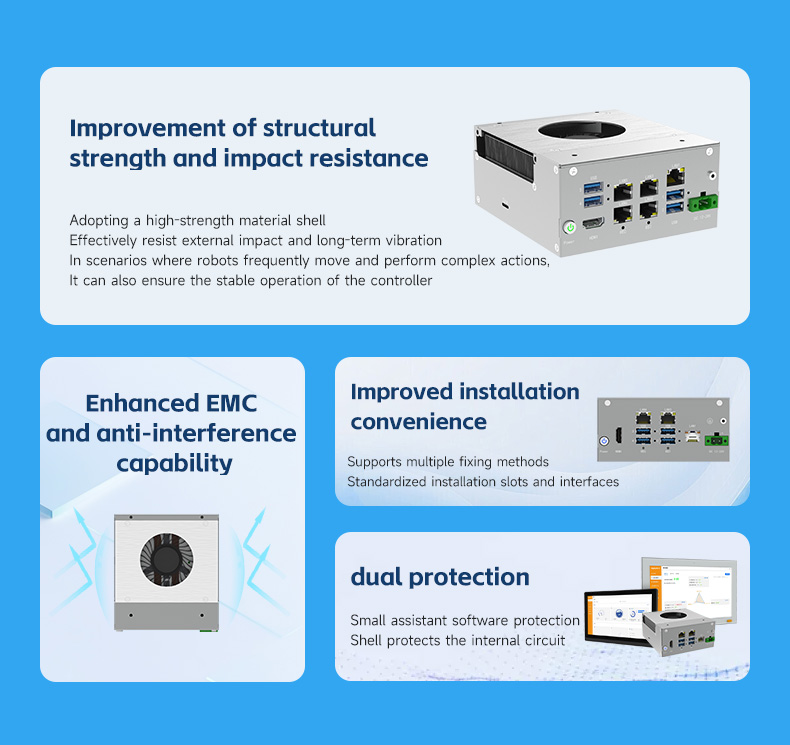
● Shell-mounted installation: Enhances structural strength and impact resistance, improving environmental protection performance
● Shell-free installation: Ideal palm-sized dimensions, triple cooling system ensures quiet and stable operation
● Side-by-side installation: Rugged structure, easy maintenance
● Stacked Installation: Highly integrated, space-saving, suitable for space-constrained scenarios
The entire series adopts an industrial-grade design, featuring excellent environmental adaptability and flexible scalability.
03.
Core Advantage: Empowering Precision Motion Control
The core advantages of this controller lie in its exceptional real-time performance and precise time synchronization capabilities, providing critical support for high-precision motion control. Whether in mobile robotics, industrial automation, or specialized applications, it ensures stable and reliable operational performance.
It boasts robust electromagnetic compatibility (EMC) and anti-interference capabilities, combined with excellent vibration resistance, ensuring stable operation in complex electromagnetic environments. The modular design enables independent functioning of each component, significantly enhancing system reliability and maintainability.
As the robotics industry advances toward higher precision and greater flexibility, the motion control architecture is undergoing a significant evolution from centralized processing to distributed collaboration. The APQ KiWiBot controller, through domestic design and innovative "big and small brain" collaborative architecture, not only addresses the challenges of high-precision control but also provides the industry with a self-reliant and controllable technical foundation, paving a new technological path for China in the global embodied intelligence competition.
Post time: Nov-14-2025