

According to IDC's latest industry forecast, China's cleaning robot market is expected to approach USD 3.4 billion in 2026, up 18% year on year. Chinese service and consumer robot manufacturers are expected to account for more than 85% of global shipments, becoming an important power of global growth.At the same time, six departments including the Ministry of Industry and Information Technology jointly issued the Work Plan for Stable Growth of the Machinery Industry (2025-2026), clearly proposing the development of intelligent livelihood equipment such as intelligent service robots to meet people's demand for a better life, while promoting integrated innovation between emerging technologies and equipment, including artificial intelligence and advanced materials.Driven by both policy standardization and market expansion, the intelligence level and service capability of commercial cleaning robots are being pushed to new heights.
Among this ongoing industry transformation and policy opportunity, the core controller serves as the “brain” of a commercial cleaning robot. Its reliability, real-time performance, and expansion capability directly determine the competitiveness .The following is a customer application of the APQ TAC-6010 wheeled robot intelligent controller in the commercial cleaning robot field.
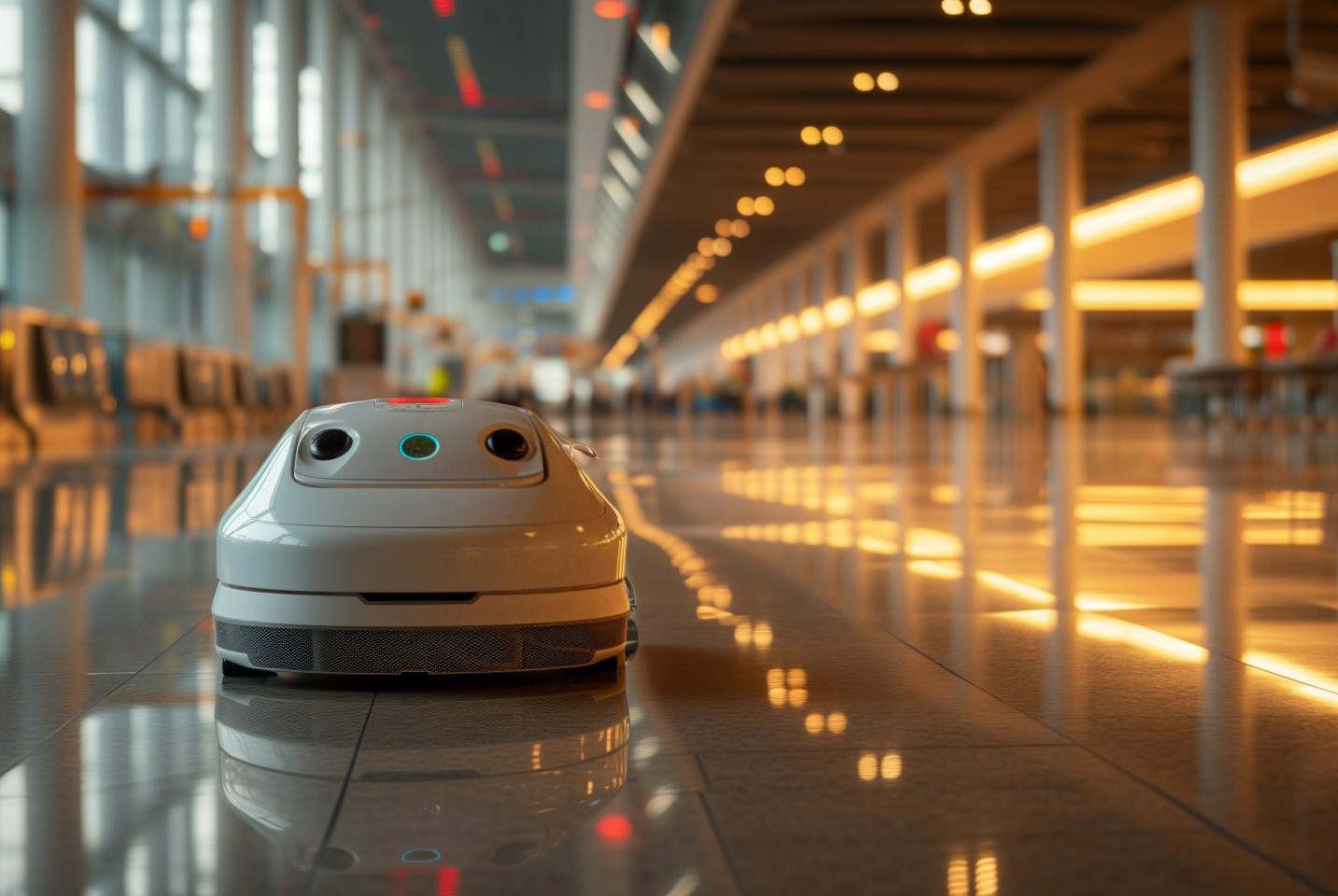
Commercial cleaning robots need to autonomously complete multiple tasks such as path planning, obstacle recognition, washing, sweeping, dust removal, and pushing in complex and changing environments such as shopping malls, hotels, office buildings, and underground parking lots. They must realize a closed-loop path of perception, decision-making, and execution, which places very high requirements on the performance, stability, and environmental adaptability of the core control unit.A leading domestic commercial cleaning robot equipment provider put forward the following stringent requirements for the core controller during technical selection:
Customer Challenge
1. High-precision motion control requirements: In complex indoor and outdoor scenarios, the robot must maintain accurate travel paths and closely follow boundaries. Unstable motion control cycles may cause path deviation and insufficient cleaning coverage, seriously affecting the user experience.
2. Multi-sensor integration: The robot integrates LiDAR, depth cameras, IMUs, ultrasonic sensors, inertial navigation modules, and multiple wheel motor drivers. The control system must simultaneously support multiple industrial bus protocols.
3. Compact structural space constraints: The internal space of a commercial cleaning robot is extremely limited. The controller must achieve high-efficiency integration within limited space while ensuring heat dissipation and vibration resistance.
4. Strong electromagnetic compatibility and stability: Commercial cleaning robots operate indoors and outdoors, across multiple floors, and in scenarios with frequent lighting changes. High-interference sources such as motor drivers and inverters are common in the working environment. The controller must provide vibration resistance, electromagnetic interference resistance, and strict EMC design to ensure stable 24/7 operation.
APQ Solution
After multiple rounds of rigorous testing, the customer ultimately selected the APQ TAC-6010 wheeled robot intelligent controller as the core computing platform for its commercial cleaning robot. The solution offers the following core advantages:
01 Strong performance:
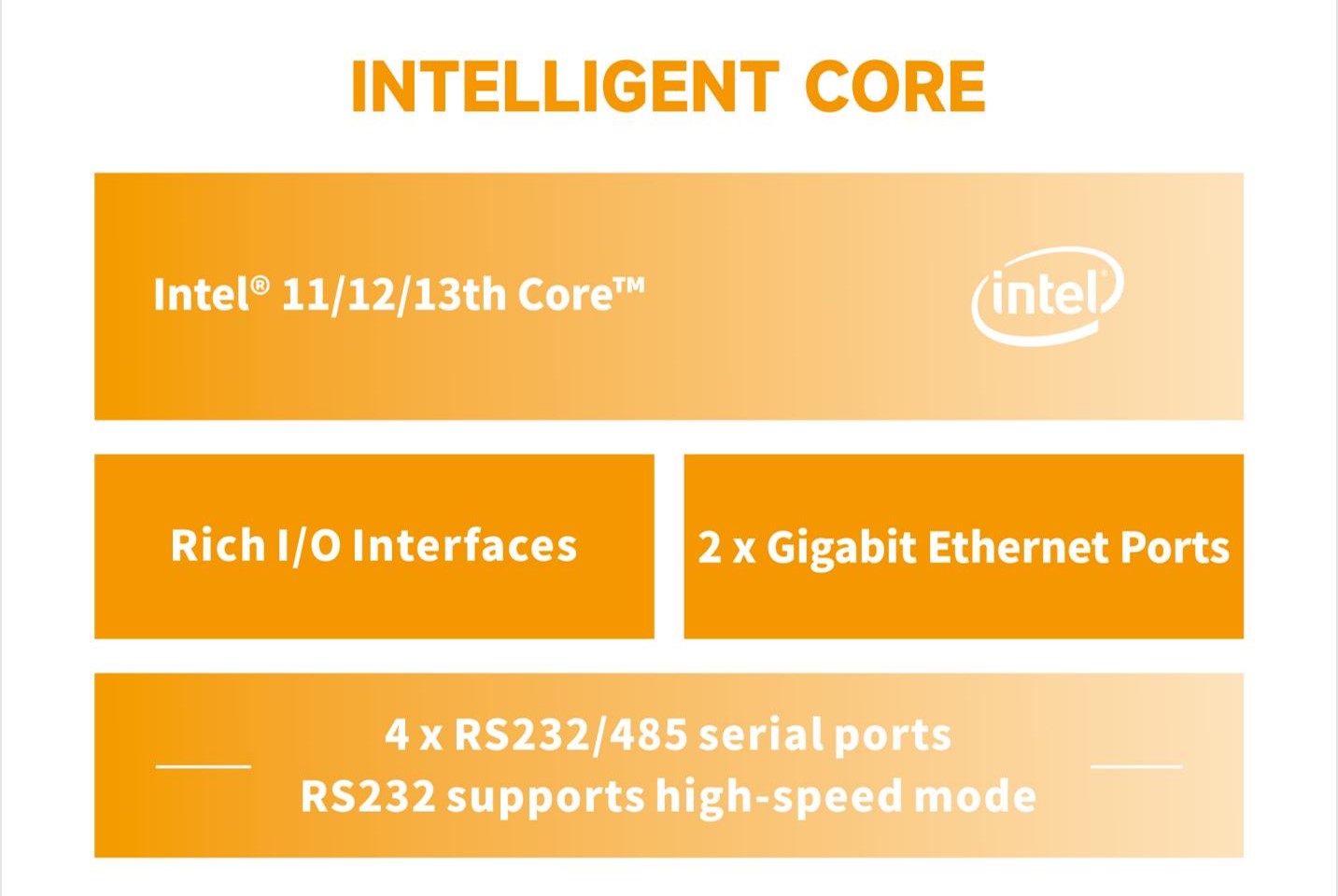
The TAC-6010 is equipped with Intel® 11th/12th/13th Gen Core mobile processors and supports disabling Turbo Boost in the BIOS for fixed-frequency operation. This is a core design for motion control applications: fixed CPU frequency helps keep the robot control cycle within a stable rhythm of 1 ms, fundamentally avoiding motion jitter caused by dynamic frequency scaling. With up to 96 GB DDR5 memory, it can easily handle the dual workload of SLAM navigation algorithms and real-time motion control computing.
02 Rich I/O interfaces:
4 x RS232/485 serial ports. RS232 supports high-speed mode, while RS485 is isolated and enabling stable connection to chassis motor drivers, attitude sensors, and cleaning actuators.
6 x USB ports (4 x USB 10Gbps + 2 x USB 5Gbps), making it convenient to connect multiple perception devices such as LiDAR, depth cameras, and ultrasonic sensors.
Dual Gigabit Ethernet ports: one for LiDAR or vision camera point-cloud data access, and one for communication with the back-end control center, enabling traffic separation and avoiding congestion.
Dual Mini PCIe slots + M.2 Key-B/E support functional expansion such as Wi-Fi, 4G, and CAN. M.2 Key-B is dedicated to 4G communication, M.2 Key-E is used for Wi-Fi/Bluetooth, and Mini PCIe can be expanded with a CAN module or 4G module. In addition, dual Nano SIM slots provide redundant communication assurance, ensuring the device remains online even when the signal fluctuates.
03 Ultra-compact body:
The TAC-6010 measures only 165 mm x 115 mm x 64.9 mm and weighs about 1.2 kg. Its ultra-compact design allows it to be easily embedded into the narrow internal space of cleaning robots. The enclosure adopts an aluminum alloy heat-sink body with a galvanized steel shell, together with a PWM smart fan active cooling system. This ensures heat dissipation efficiency in the compact body while maintaining industrial-grade protection strength. The complete unit supports DIN rail, wall-mounted, and desktop installation, providing flexible deployment options for different robot chassis designs.
04 Wide-temperature, wide-voltage industrial-grade design:
The TAC-6010 supports 12 V to 28 V DC wide-voltage input and is compatible with various robot power supply platforms. Its operating temperature range covers -20°C to 60°C, with a storage temperature range of -40°C to 80°C. The product has passed IEC 60068-2-64 vibration testing and IEC 60068-2-27 shock testing, ensuring long-term stability in vibrating robot operating environments.
Value Achievements:
By introducing the APQ TAC-6010 wheeled robot intelligent controller, this commercial cleaning robot manufacturer successfully achieved the following:
Precise and stable motion control:
By locking the CPU base frequency and disabling Turbo Boost at the BIOS level, the motion control cycle remains free of jitter. The robot travels smoothly and achieves high-precision edge cleaning, significantly improving cleaning coverage and user experience.
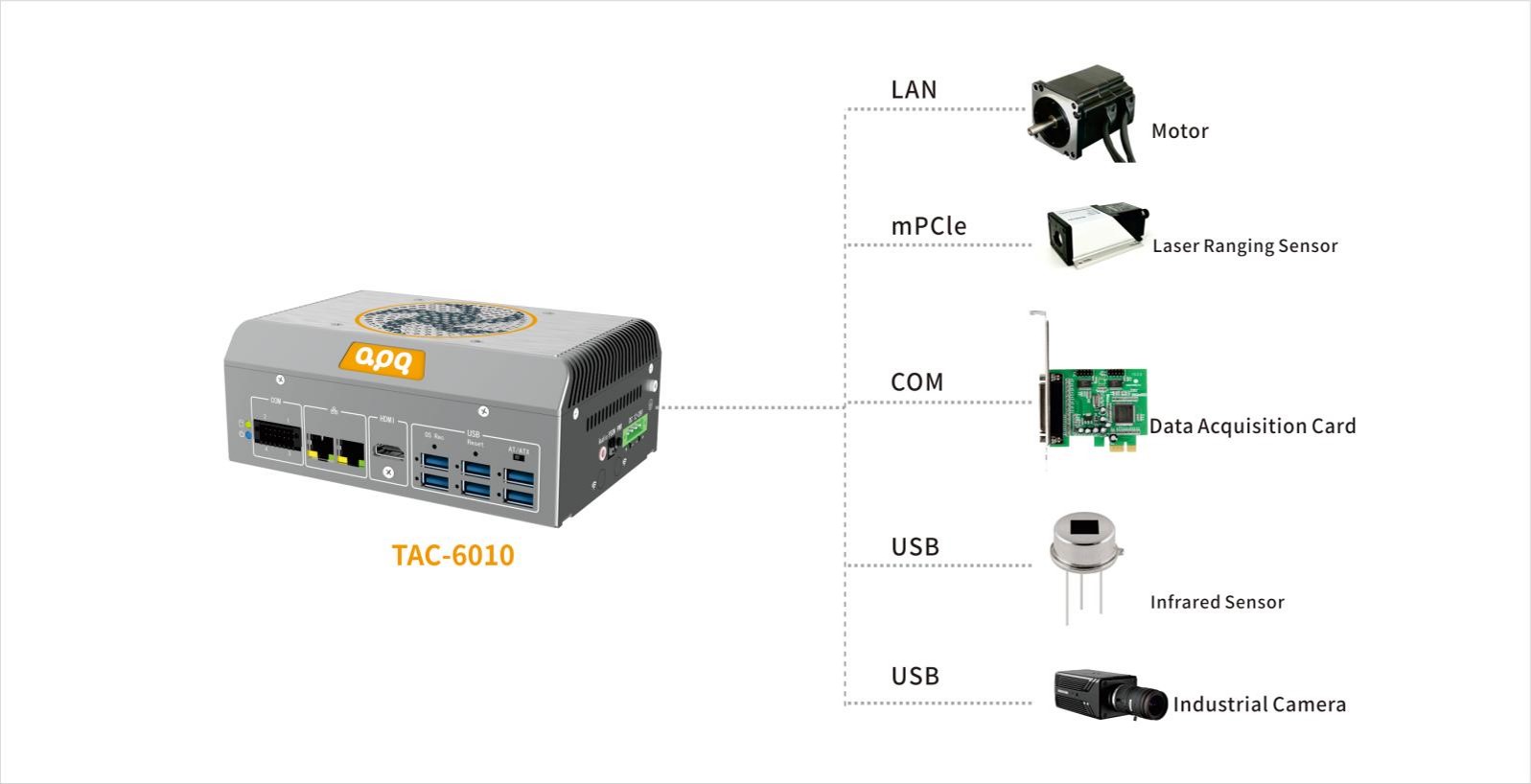
Efficient multi-sensor integration: 4 x RS232/485 + 6 x USB + dual Gigabit Ethernet ports + Mini PCIe/M.2 dual expansion support one-system access for LiDAR, depth cameras, IMUs, motor drivers, and other devices. This simplifies the system architecture and reduces overall BOM complexity.
Continuous operation in complex environments: Wide-temperature operation from -20°C to 60°C, 12 V to 28 V wide-voltage input, IEC vibration/shock certification, and strong EMC design ensure stable 24/7 operation in high-interference scenarios such as shopping malls and parking lots, with a return-for-repair rate below 0.3%.
Compact deployment and space saving: The ultra-small 165 mm x 115 mm x 64.9 mm body, with a net weight of 1.2 kg, supports DIN rail, wall-mounted, and desktop installation. It can be flexibly embedded inside the robot chassis, freeing more design space for functional modules such as batteries and water tanks.
With the full implementation of national standards for commercial cleaning robots, the industry is evolving from competing on configuration to competing on stability and compliance.With its ultra-compact body design, mobile-grade efficient computing power, wide-temperature and wide-voltage operation capability, rich I/O expansion interfaces, and industrial-grade reliability, the APQ TAC-6010 wheeled robot intelligent controller precisely meets the core needs of commercial cleaning robots in motion control accuracy, multi-sensor fusion, remote operation and maintenance, vibration resistance, and shock resistance. It has become a preferred control platform in the wheeled robot field.Whether for indoor commercial cleaning or outdoor inspection and special-purpose vehicles, the TAC-6010 can serve as the core computing unit of mobile robots, providing stable, efficient, and reliable computing support.
Post time: Jun-15-2026


